

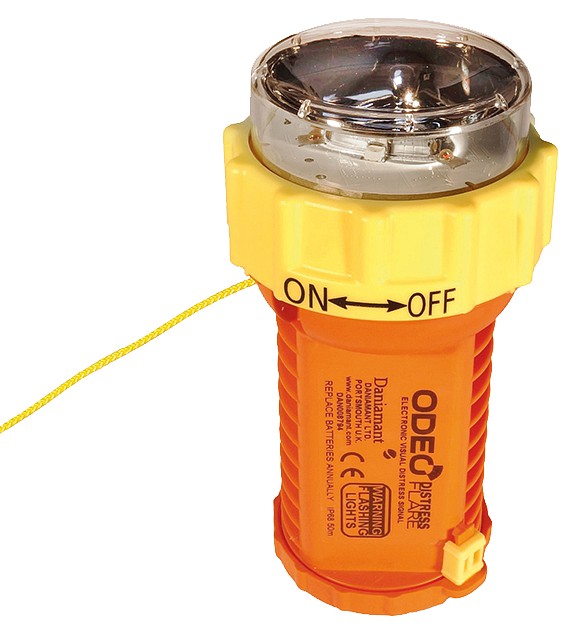
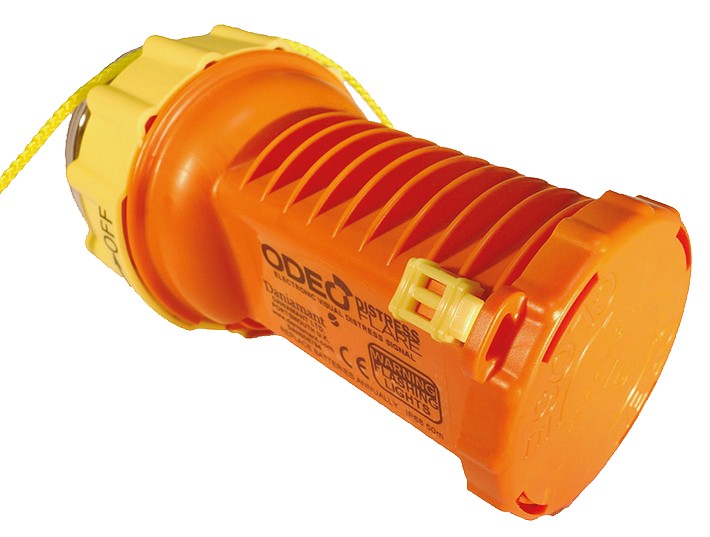


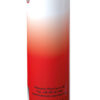
Traditional flares light up for about 30 seconds before going out. Odeo Distress lights up for about 8 hours. Since the lighting is not based on pyrotechnics, Odeo products are completely safe when switched on. The torch can also be carried in your carry-on luggage on flights, as it is powered by a lithium battery or alkaline batteries.
KEY BENEFITS
• No heat, no open flames or flames – no risks
• No explosive compounds or hazardous waste
• Extremely safe to use
• Longer operating time – now 8 hours, 25% longer than ODEO Mk3
• Lanyard included
• SAR safe
• Ideal for diving applications: tested to a depth of 75m
• Floats
• Easy battery replacement
• Now also includes an IR LED To facilitate NVG-SAR searches
• SoS signal built-in
• Small and compact (quickly taken to emergency situations)
• Easy activation (even with wet hands or gloves)
• Dual function: rapid flashing and SoS car signal
TYPICAL USE
Originally designed for marine use, but suitable for all kinds of outdoor applications due to its small size and light weight. The smaller size makes the ODEO Distress model ideal for mountaineering, skiing, kayaking, exploration, etc. Eliminates the need to carry emergency flares – no risk of fires or forest fires. The small size and water resistance of the ODEO Distress to IP68 (50 m) make it an ideal device for diving.
POWER SOURCE
The Odeo Distress operates on 4 x L91 lithium batteries or 4 x alkaline batteries. These batteries have a very long storage life and their capacity and temperature resistance allow for long operating times even in extreme temperatures.
COMPLIANCE AND STANDARDS
The Odeo Distress is designed to meet SOLAS requirements, making it a truly good alternative to traditional flares. The US Coast Guard is currently the leading developer of standards for eVDSD (Electronic Visual Distress Signal Device). These devices are used to replace traditional pyrotechnic flares. Odeo Flare™ is equipped with an automatic pre-programmed SOS signal for flashing cycles (as defined in Annex 4 /COLREGS), thus meeting the requirements of international standards.
| Svars | 0,35 kg |
|---|---|
| Technical name | 31-001A |
Saistītie Produkti
Electricity
Consumer electronics

Campaigns
Consumer electronics

Maritim

Anchor winches
Electricity
Electricity